
The short answer
Wallpaper is a strong choice when you want pattern, texture or color that paint cannot deliver, in nearly any room with a stable, dry wall. A lasting install depends on a repaired and primed surface, a plumb starting line, matched patterns and clean trimming, plus steady indoor humidity afterward.
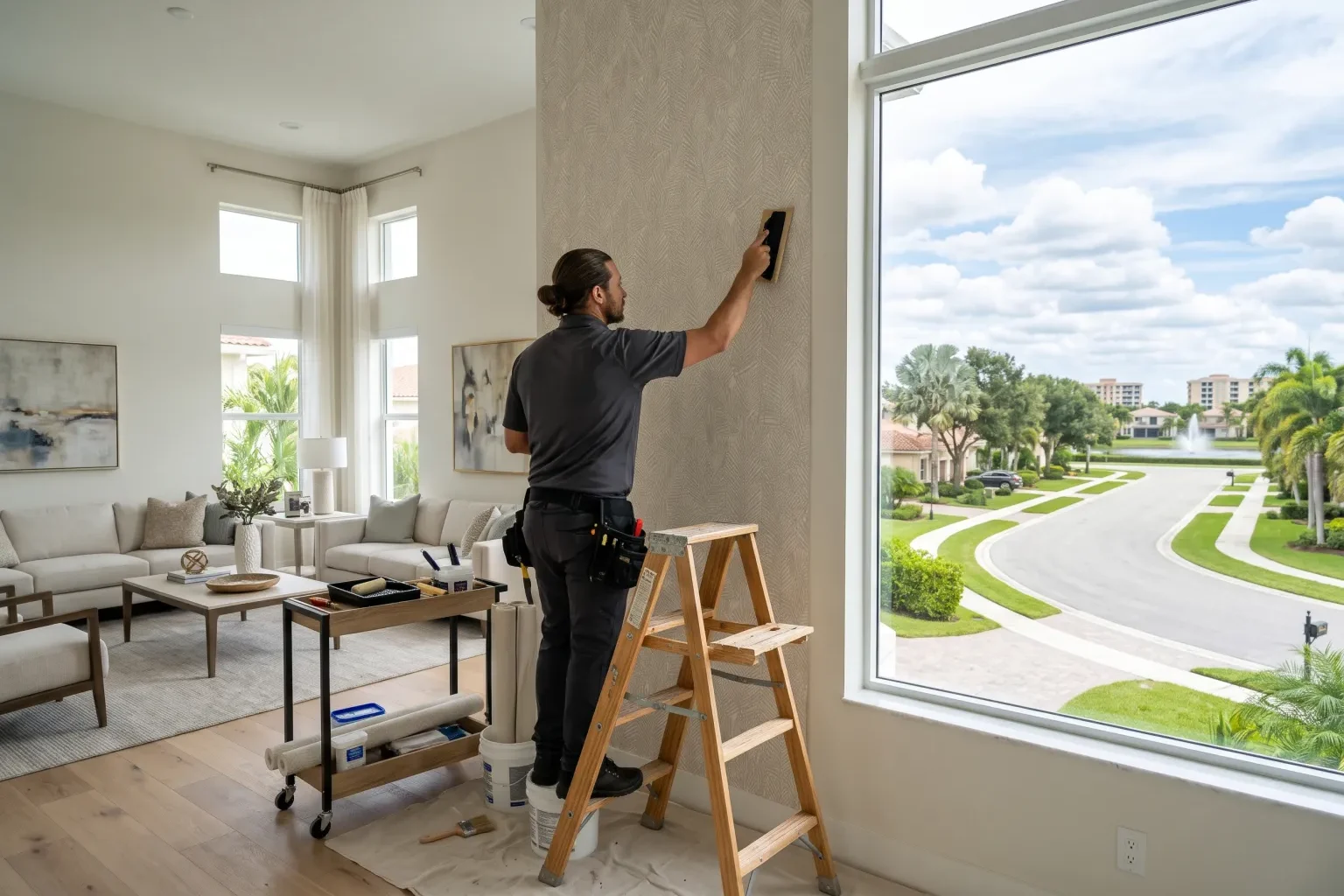
Wallpaper changes a room more than almost any other single update. A pattern in a dining room makes it feel finished, a soft texture calms a bedroom, and a bold print turns a plain powder room into the space guests remember. Getting there takes more than paste and a ladder, though. Straight lines, matched patterns and seams that stay closed through a Florida summer come from planning and patient handwork. WallEdge Installation hangs traditional, pre-pasted, non-woven and specialty papers for homeowners in Boynton Beach and the surrounding Palm Beach County area. Read on for guidance on picking the right room and paper, what happens to your walls before the first strip goes up, our step-by-step method, the things that shape a quote, and how to care for the result.
Choosing the room and the paper
Almost any interior room can take wallpaper; the trick is pairing the paper type with how the space is used. Non-woven papers are breathable, dimensionally stable and come off in whole sheets later, which makes them a smart default for living rooms and bedrooms. Traditional pulp papers have rich printing but tear more easily when wet. Vinyl-coated papers take wiping and are good in kitchens and family rooms. Fabric-backed vinyl is the choice for bathrooms and high-traffic halls.
Consider light and scale as well. Large prints suit tall walls and open great rooms, while a small, tight pattern can make a little bedroom feel busy. Many South Florida homes have walls broken up by sliders, arches and soffits, and that can chop a large motif awkwardly. Bring us a sample or two, and we will tell you how they will lay out on your specific walls before you order the full quantity.
Before the first strip: prep and primer
We protect floors and furniture, remove switch plates and outlet covers, and turn off power to the circuits we will be working around. Then we inspect the walls closely.
Holes, dents and cracks get filled and sanded. Textured walls, common in newer Palm Beach County homes, are smoothed with a skim coat when the chosen paper is thin enough to show bumps. Old wallpaper is removed rather than covered. Any sign of moisture near windows or on exterior block walls is checked before we go further.
Next comes a coat of wallcovering primer. It seals porous drywall and patches so the wall absorbs paste evenly, adds a little slip so strips can be adjusted, and protects the drywall when the paper is eventually stripped. For bathrooms and kitchens, we use a primer with mildew resistance.
Our installation method
Each project follows the same core sequence, adjusted for the paper and the room.
- Measure: we take wall heights and widths, note windows and doors, and confirm you have enough rolls from one batch.
- Plan the layout: we decide where the pattern should be centered, such as over a fireplace or bed, and where the last, unmatched seam will hide.
- Set a plumb line: a laser level gives a true vertical for the first strip, independent of crooked corners.
- Cut and match: strips are cut with extra length and checked against each other so the pattern lines up horizontally before pasting.
- Paste and book: paste goes on the back or the wall depending on the paper; pasted papers rest folded for the time the maker specifies so they expand before hanging.
- Hang and smooth: each strip is placed to the line or the previous seam and smoothed from the center out to remove air.
- Close the seams: edges are butted tight and lightly rolled; we never stretch paper to close a gap.
- Trim: ceilings, baseboards, casings and outlets are cut with a sharp blade against a wide knife, changing blades often.
- Clean up: paste is wiped from the face, trim and ceiling, and covers go back on once everything is in place.
What goes into your quote
A wallpaper quote reflects labor and preparation more than wall area alone. We look at the condition of the walls and how much repair or removal is needed. The paper itself matters: delicate hand-printed papers, unpasted traditional rolls and heavy vinyls each take different handling. Large or drop-match pattern repeats increase waste and time. Room size, ceiling height and features like stairwells, vaulted ceilings, arches and built-in cabinetry also add to the work. We explain each factor during the visit so the quote is easy to follow.
After the install: care in a humid climate
Paste needs a few days to dry fully. Keep the room at a steady, comfortable temperature with the AC on, and do not aim fans or heaters directly at the new walls, since fast drying can shrink seams open.
Ongoing care depends on the paper. Dust non-woven and traditional papers lightly; wipe vinyl-coated papers with a damp sponge. Florida's wet months from May through October push indoor humidity up, so steady air conditioning and bathroom fans help keep edges flat. If you are leaving for an extended period during hurricane season, think about how the house will stay dry if power goes out, and check the walls when you return. Small lifts are easy to fix early with a little seam adhesive.
Wallpaper Installation by city
- Wallpaper Installation in Ocean Ridge
- Wallpaper Installation in Briny Breezes
- Wallpaper Installation in Hypoluxo
- Wallpaper Installation in Manalapan
- Wallpaper Installation in Gulf Stream
- Wallpaper Installation in Lantana
- Wallpaper Installation in South Palm Beach
- Wallpaper Installation in Atlantis
- Wallpaper Installation in Delray Beach
- Wallpaper Installation in Lake Worth Beach
- Wallpaper Installation in Greenacres
- Wallpaper Installation in Lake Clarke Shores