
The short answer
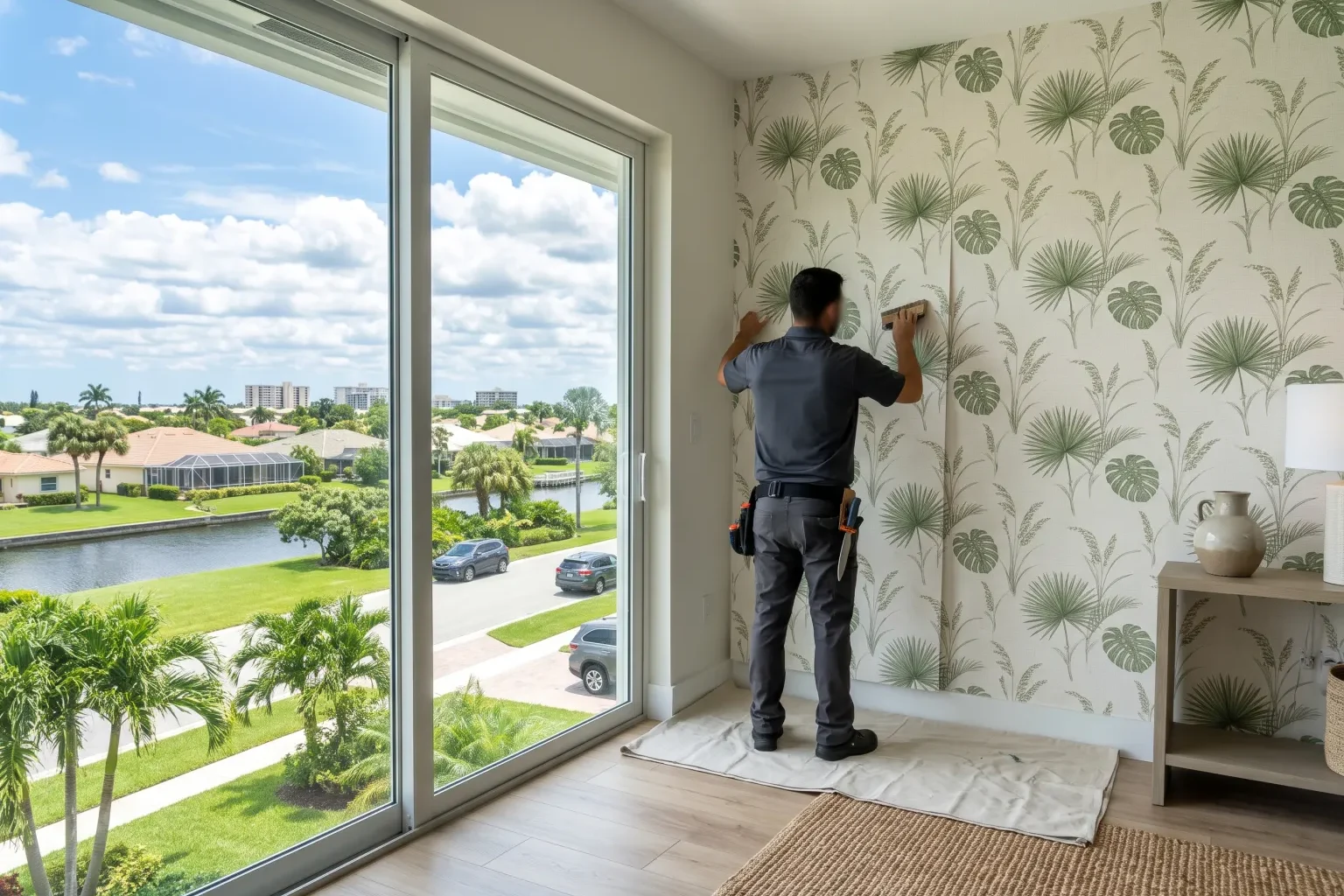
An accent wall works best on a single uninterrupted wall that already anchors the room, such as a headboard or fireplace wall. We repair and prime that wall, plot the pattern from its center, hang matched seams and trim clean edges, usually in one visit.
One papered wall can change how a room feels without committing the whole space to a bold print. WallEdge Installation hangs accent walls for homeowners in Boynton Beach, Lantana, Delray Beach and the surrounding Palm Beach County towns. Most of our accent work lands behind a bed, around a fireplace or TV niche, at the end of a hallway, or across the back wall of a dining nook. Because a single feature wall draws every eye in the room, small flaws show more than they would on four plain walls. A wavy seam, a pattern that drifts off level, or a bump left in the drywall gets noticed the moment someone walks in. This page explains how we decide whether an accent wall suits your room, how we get the surface ready in a humid South Florida house, what happens on installation day, and what pushes a project's scope up or down.
Is a feature wall the right move for your room?
A papered focal wall makes sense when the room already has a natural center of attention and you want to strengthen it. Bedrooms with a headboard wall, living rooms built around a media wall, and open-plan condos that need some visual separation between kitchen and lounge are the usual candidates. It is also a sensible test run if you love a large-scale botanical or a dark grasscloth but are unsure about living with it on every surface.
It is less suited to walls broken up by several windows, sliding doors or a run of outlets and switches, because the pattern gets chopped into small pieces and the effect is lost. In those cases we may suggest a different wall, or a ceiling, instead.
- Good fit: one long, mostly solid wall that the furniture already faces
- Good fit: a recessed niche, a stair wall, or the wall behind a dining table
- Think twice: walls with sliders to the pool deck or multiple window openings
- Think twice: an exterior block wall that shows signs of moisture or efflorescence
Getting the surface ready before any paper goes up
Many homes around Boynton Beach have concrete-block exterior walls finished with plaster or furring and drywall, and older ranch houses often carry several coats of paint, texture, or leftover adhesive from a past wallcovering. We start by checking the wall with a light held flat against it, which exposes ridges, nail pops and patched areas that would telegraph through thin paper.
Holes and dents get filled and sanded. Heavy orange-peel or knockdown texture is skim-coated smooth when the chosen paper is thin enough to show it. Glossy paint gets dulled so the primer can bite. On walls that share space with a bathroom or face the afternoon sun, we look for soft spots or bubbling paint that point to trapped moisture, since sealing over a damp wall invites mold and lifting seams during the wet season.
Once the wall is sound, we roll on a wallcovering primer matched to the paper. Most modern papers call for a pigmented, non-porous primer that lets the paste stay workable during hanging and lets the paper come off cleanly years later. If your air conditioning runs constantly, as it does in most local homes from May through October, we let the primer cure fully before hanging so it is not still soft under the paste.
How installation day runs, step by step
Hanging a single feature wall is a careful, measured job rather than a fast one. The order below is how we typically work, adjusted for the specific paper and the shape of your wall.
- Measure and plan: we measure height and width, note the pattern repeat, and decide where the main motif should sit so it is centered on the wall or on the bed or mantel in front of it.
- Check the rolls: batch and run numbers are confirmed so every strip comes from the same dye lot, and we unroll a length to inspect for printing defects before cutting.
- Plumb the first strip: a laser or plumb line sets a true vertical, because walls and corners in many homes are not perfectly straight.
- Match the pattern: each strip is cut with enough extra to line up straight, half-drop or random-match patterns, and we dry-fit the sequence before any paste goes on.
- Paste and book: depending on the product we paste the wall or the paper, then book or relax the strips for the time the manufacturer specifies so they do not shrink on the wall.
- Butt the seams: edges are butted tight, not overlapped, then lightly rolled so they sit flat without squeezing out paste or burnishing the surface.
- Trim and detail: excess at the ceiling line, baseboard and corners is cut with fresh blades; plates come off outlets and switches and the paper is relieved neatly around them.
- Clean and inspect: paste is sponged off the face and trim, and we look along the wall in raking light for bubbles or lifted edges before packing up.
What shapes the scope and cost of a feature wall
Every accent wall is quoted on its own details, and the same paper can take very different effort on two different walls. These are the factors that move the number most.
- Wall condition: removing old paper, skim-coating texture or fixing water-damaged drywall adds time before hanging can begin.
- Type of paper: unpasted traditional papers, grasscloth, fabric-backed vinyl and large mural panels each handle differently; natural fibers and delicate papers need slower, cleaner work.
- Pattern repeat: a long or half-drop repeat means more waste and more careful cutting than a small or random match.
- Room size and wall height: a tall great-room wall or a stair wall needs scaffolding or planks and more strips than a standard bedroom wall.
- Interruptions: windows, built-ins, outlets, arches and angled ceilings each add cuts and fitting time.
Looking after the wall once it is up
Give the paste a few days to cure before hanging artwork or pushing a headboard tight against the wall. During that time keep the room at a steady temperature and avoid blasting a fan or portable heater straight at the surface, since uneven drying can open seams.
For routine care, dust with a soft dry cloth or a vacuum brush attachment. Washable and scrubbable vinyls can take a damp sponge with mild soap; grasscloth, silk and most paper-faced products should only be blotted, never rubbed. Keep your AC set and running through the summer storm months, because steady indoor humidity is what keeps seams flat in a coastal house. If a seam ever lifts, call us early: a small edge is easy to re-adhere, while a seam left open tends to collect dirt and curl further.
Accent Wall Installation by city
- Accent Wall Installation in Ocean Ridge
- Accent Wall Installation in Briny Breezes
- Accent Wall Installation in Hypoluxo
- Accent Wall Installation in Manalapan
- Accent Wall Installation in Gulf Stream
- Accent Wall Installation in Lantana
- Accent Wall Installation in South Palm Beach
- Accent Wall Installation in Atlantis
- Accent Wall Installation in Delray Beach
- Accent Wall Installation in Lake Worth Beach
- Accent Wall Installation in Greenacres
- Accent Wall Installation in Lake Clarke Shores