
The short answer
Grasscloth suits low-traffic rooms like bedrooms, offices and dining rooms where you want natural texture. It needs a smooth, sealed wall, clean-handed hanging with no paste on the face, and careful bolt sequencing because seams and color variation are part of the look.
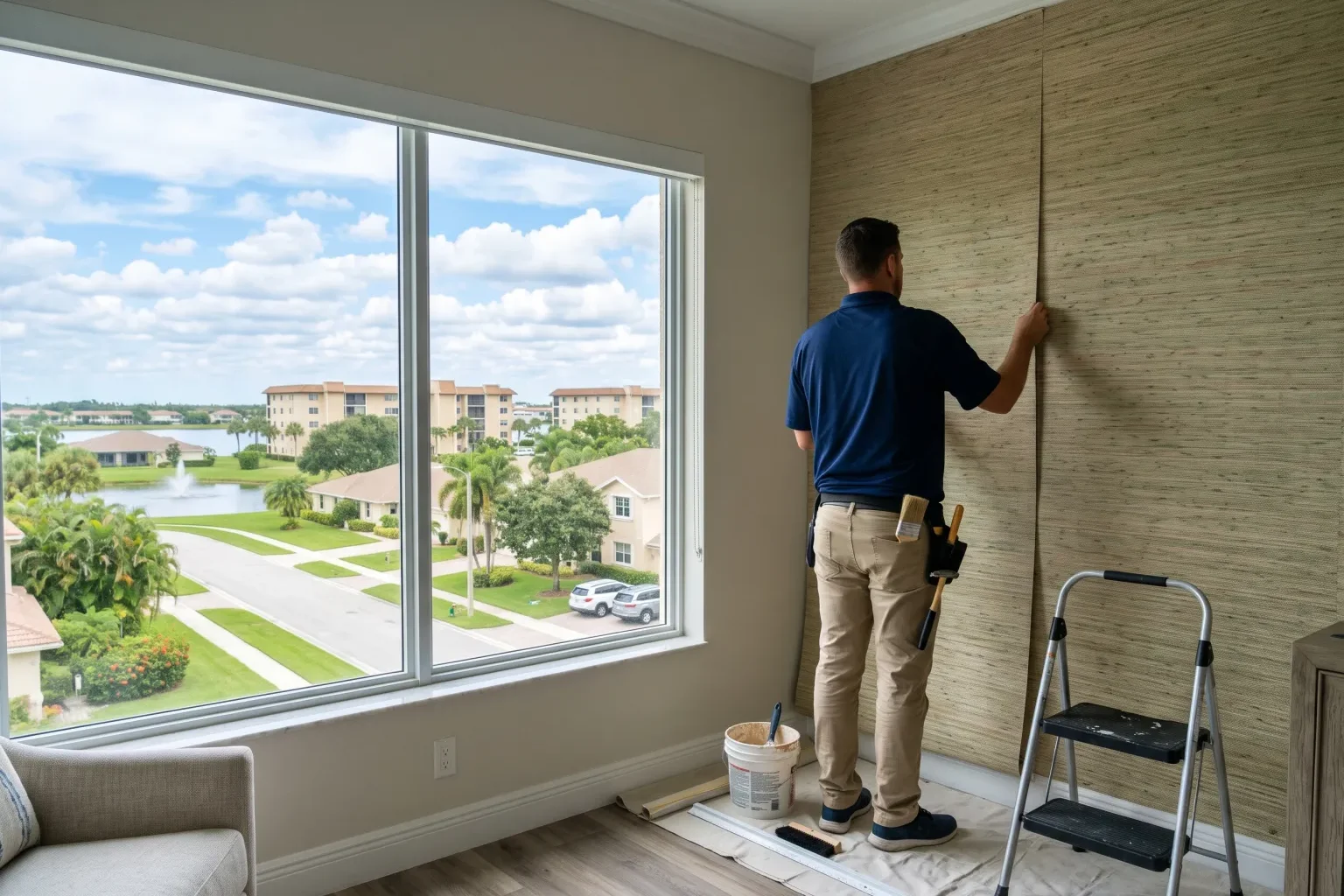
Grasscloth is woven from natural fibers such as sisal, jute, arrowroot and seagrass, then laminated to a paper backing. It brings texture and warmth that printed paper cannot copy, and it behaves very differently on the wall. The fibers stain if paste touches the face, the color shifts from one bolt to the next, and the seams always show to some degree because no two strands are identical. WallEdge Installation hangs grasscloth for homeowners in Boynton Beach and the surrounding Palm Beach County communities, from Lantana and Hypoluxo down to Delray Beach. This page explains where the material works, how we get walls ready for it, the way we hang each strip, what drives the size of a quote, and how to look after the finished room in our humid coastal climate.
Rooms where grasscloth earns its place
Natural fiber is soft and absorbent, so we steer it toward spaces that see gentle use. A primary bedroom, a home office, a formal dining room or a single accent wall behind a sofa are the classic spots. The weave softens echo slightly and reads as calm and layered under lamp light.
It is a poor match for a kids' bathroom, a laundry room or the wall beside a kitchen range. Splashes leave water rings, grease darkens the fibers, and steam can loosen the backing. If you love the look for a wet area, ask us about vinyl grasscloth alternatives, which copy the texture on a scrubbable surface.
Sunlight matters too. Many Boynton Beach homes have big sliders facing a pool deck or the water, and strong afternoon sun fades natural dyes over time. We look at window orientation during the visit and may suggest a lighter, undyed weave or window film for rooms that bake.
Getting the wall ready for natural fiber
Grasscloth is thin enough that bumps, patched cracks and old roller texture can telegraph through, especially on the knockdown finishes common in South Florida tract homes. We start by checking the surface with a work light held flat to the wall, which throws every ridge into shadow.
From there we skim or sand rough areas, fill nail holes and settle cracks, and remove loose paint. On concrete-block exterior walls we check for any dampness first, since moisture pushing through the block will eventually stain fiber from behind.
Once the surface is flat, we roll on a pigmented wallcovering primer. This seals the wall so paste does not soak in unevenly, gives the strips some slip for positioning, and makes future removal far easier. Where the paper is lightly colored and the wall is dark, a tinted primer keeps the old color from ghosting through gaps in the weave.
How we hang grasscloth, strip by strip
Hanging natural fiber is slower than standard paper, and the order of operations is what keeps the finished wall looking intentional rather than patchy.
- Measure and plan: we measure each wall, map where seams will fall, and keep narrow slivers away from corners and focal points.
- Check run numbers: every bolt is inspected for matching run or dye lot, then laid out so neighboring strips come from the same bolt where possible.
- Cut and reverse: many grasscloths look best with alternate strips reversed top to bottom, which evens out side-to-side shading; we follow the maker's instructions on this.
- Paste the back only: we apply paste to the backing with a roller, book the strip briefly so it relaxes, and keep hands and tools clean so nothing reaches the fibers.
- Butt the seams: edges are pushed together without overlap, and we smooth with a soft brush rather than a hard plastic tool that could crush the weave.
- Trim with a fresh blade: ceiling lines, baseboards, outlets and window casings are cut with a new blade every few cuts so fibers slice cleanly instead of fraying.
- Final check: we look down each seam in raking light and wipe away any stray paste from trim and ceiling with clean water.
What shapes the quote for your project
We do not post a flat rate because grasscloth jobs vary widely. The main factors we weigh when pricing a room are listed below, and we walk through each one with you during the visit.
- Wall condition: smooth, sound drywall goes quickly, while textured or damaged walls need skim coating and extra drying time.
- Product type: paper-backed sisal, delicate arrowroot and fabric-backed weaves each handle differently and some need special adhesive.
- Pattern or repeat: most grasscloth has no repeat, but printed or embroidered versions need matching and more waste.
- Room size and ceiling height: tall walls, stairwells and vaulted ceilings require scaffolding or planks and more careful seam work.
- Obstacles: built-ins, many windows, arches and outlets add trimming time.
Living with grasscloth in a humid climate
South Florida runs humid most of the year, with the wettest stretch from May through October. Keeping your air conditioning steady, rather than shutting it off for long trips, protects natural fiber from swelling and seam lift. A dehumidifier helps in rooms that sit closed for weeks.
For routine care, dust the wall now and then with a soft brush attachment on a vacuum, moving gently with the grain. Blot spills right away with a dry white cloth and never scrub. If water marks appear, call us before trying a cleaner, because many products darken fiber permanently.
During hurricane season, which runs from June through November, homes are sometimes closed up without power for days. If that happens, open the house and run the AC as soon as you can, and let us know if any seams have lifted so we can re-adhere them before the edges curl.
Grasscloth Wallpaper Installation by city
- Grasscloth Wallpaper Installation in Ocean Ridge
- Grasscloth Wallpaper Installation in Briny Breezes
- Grasscloth Wallpaper Installation in Hypoluxo
- Grasscloth Wallpaper Installation in Manalapan
- Grasscloth Wallpaper Installation in Gulf Stream
- Grasscloth Wallpaper Installation in Lantana
- Grasscloth Wallpaper Installation in South Palm Beach
- Grasscloth Wallpaper Installation in Atlantis
- Grasscloth Wallpaper Installation in Delray Beach
- Grasscloth Wallpaper Installation in Lake Worth Beach
- Grasscloth Wallpaper Installation in Greenacres
- Grasscloth Wallpaper Installation in Lake Clarke Shores